
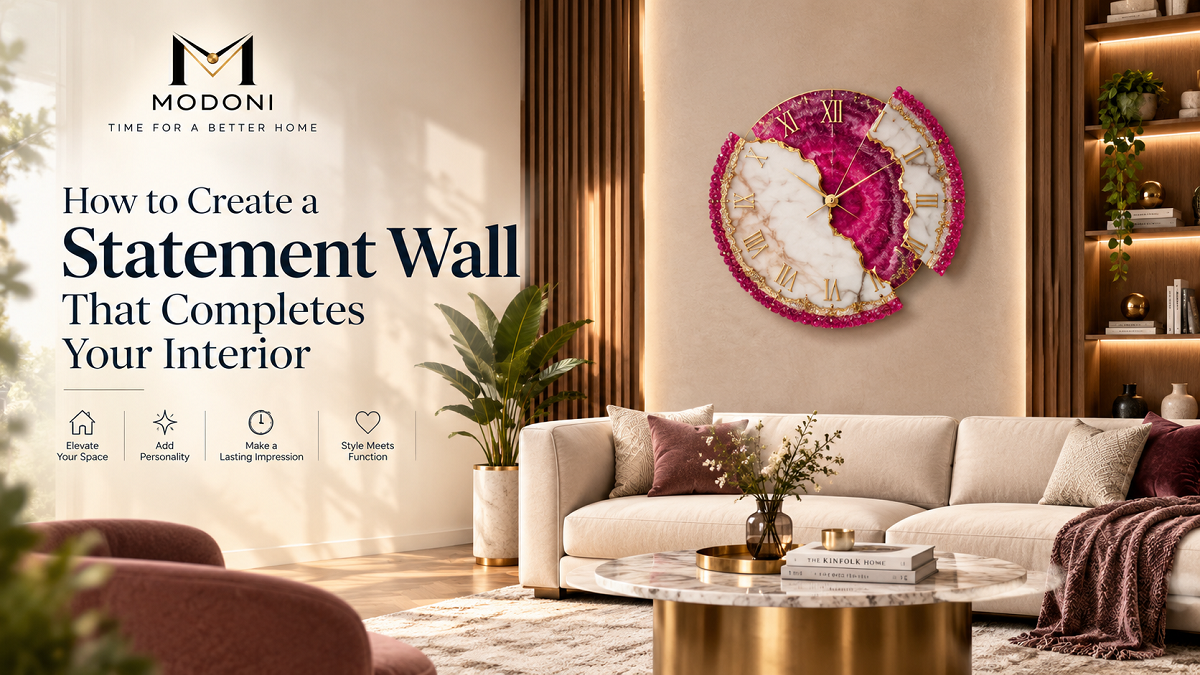
Every room tells a story, but there’s usually one place where that story reaches its climax — the statement wall. Whether you’re redesigning your living room, refreshing a hallway, or giving a neglected corner new purpose, a well-executed accent wall can transform an ordinary space into something memorable. It’s not just about paint or wallpaper anymore; today’s homeowners are layering texture, art, and function to create walls that feel curated rather than accidental.
Start With a Clear Vision
Before you pick up a paintbrush or browse a single catalog, decide what mood you want the wall to convey. Are you going for warmth and coziness, or something sleek and modern? A statement wall works best when it aligns with the overall personality of the room. In a luxury living room, for instance, the goal is usually to strike a balance between opulence and restraint — rich materials, subtle lighting, and a few carefully chosen pieces rather than a cluttered display.
Think of the wall as a canvas that supports the room’s narrative. If your space leans toward minimalism, a single oversized art piece or a sculptural mirror might be enough. If you prefer a more layered, eclectic look, combining multiple elements — textures, frames, and functional decor — can add depth without feeling chaotic.
Choose the Right Focal Point
The heart of any statement wall is its focal point, and this is where your choice of decor matters most. Large-scale art, a gallery arrangement, or a bold textured panel can all serve this purpose. But one often-overlooked option is incorporating a timepiece as the centerpiece. A well-placed wall clock does double duty: it’s functional and visually striking, especially when chosen in a material or finish that complements the room’s palette — brushed brass, matte black, or natural wood tones all work beautifully in different settings.
If you want something truly one-of-a-kind, consider going custom. A custom wall clock lets you dictate the size, color, numerals, and even the material to match your exact vision. This is particularly effective in a living room where you want the wall to feel personal rather than showroom-staged. A piece like this becomes a talking point — guests notice it, ask about it, and it instantly signals intentional design choices throughout the home.
Layer Textures and Materials
Flat, single-material walls rarely hold visual interest for long. To elevate your space, mix materials thoughtfully. Wood paneling paired with metallic accents, or a textured wallpaper behind a floating shelf, adds dimension that a plain painted wall can’t achieve. Lighting also plays a critical role — sconces or a discreet picture light can highlight your focal piece and create shadow play that makes the wall feel dynamic throughout the day.
For those searching for a fresh wall decor idea, consider combining a few smaller elements into a cohesive vignette: a mirror, a small shelf with curated objects, and a piece of framed art arranged asymmetrically. This layered approach feels more designed than a single large print, and it gives you flexibility to update pieces over time without redoing the entire wall.
Balance Symmetry and Asymmetry
Symmetrical arrangements feel formal and grounded — ideal for traditional or classic interiors. Asymmetrical layouts, on the other hand, feel more relaxed and contemporary. Neither approach is inherently better; it depends on the tone you’re setting. A safe rule of thumb: if your furniture and architecture are already symmetrical, an asymmetrical wall arrangement can add welcome tension. If the room already feels busy, symmetry brings calm.
Scale Matters More Than You Think
One of the most common mistakes people make with wall decor is choosing pieces that are too small for the wall. A tiny frame on a large, empty wall can look lost rather than intentional. As a general guideline, your focal piece—whether it’s art, a mirror, or a clock—should occupy roughly two-thirds of the available wall space, or be part of a grouping that collectively fills that proportion.
Bring It All Together
A statement wall isn’t about following trends blindly; it’s about creating a space that feels authentically yours while still elevating the room’s design. Start with a strong focal point, layer in texture and lighting, and don’t be afraid to mix functional pieces with purely decorative ones. Whether you choose a bold art print, a curated gallery wall, or a striking clock as your anchor, the goal is cohesion — every element should feel like it belongs.
Done well, this single wall can become the defining feature of your entire room, proving that thoughtful design doesn’t require a full renovation — just the right combination of vision, materials, and a few standout pieces.